Front Street Playschool
Curriculum
Our Curriculum
Our foremost goal at Front St. Playschool is to love and accept each child individually, as God has created him/her, and then to help him/her develop emotionally, spiritually, and cognitively. We want to nurture a life-long love of learning! We strive to achieve this by providing a developmentally appropriate program. Our teachers ensure that all goals and experiences are suited to children’s learning and development and challenging enough to promote their progress and interest. Research shows that children learn best through concrete learning, which is why we focus on hands-on, play based learning!
What is Play Based Learning?
Context for Learning!
Children practice and reinforce their learning in multiple areas during play. It gives them a place and time for learning that cannot be achieved through completing a worksheet. For example, in playing restaurant, children write and draw menus, set prices, take orders, and pay with pretend money. Play provides rich learning opportunities and leads to children’s success and self-esteem.
Improves Vocabulary, Communication, and Language!
Pretend play is beneficial because it allows young children to practice new vocabulary when they speak and try to understand others. During social play, children often reciprocate each other’s words and actions to reach agreements.
Promotes Impulse Control and Emotional Regulation!
Well emotionally regulated children can wait their turn, resist the impulse to grab a toy from a friend, persist through challenging activities, and control negative emotions. Multiple studies have found that children who spend time in pretend play with their caregivers and peers were better and regulating their emotions and continuing to play.
Problem Solving Skills!
When children act out life’s problems in pretend playing, they are able to cope with the struggles in their own way. It provides a safe opportunity for children to rehearse skills and future social roles.
Better Brain Development!
Neuroscientists have discovered that enrichment such as toys, games, and playing can alter a brain’s chemistry and a child’s development. The cerebral cortex, the area of the brain responsible for higher cognitive processing, can benefit from environmental enrichment and children’s play more than other
areas of the brain.
Contact Information
Staci Poplin—Director
Front Street Playschool
P. O. Box 2597
Burlington, NC 27216
Goals & Concepts
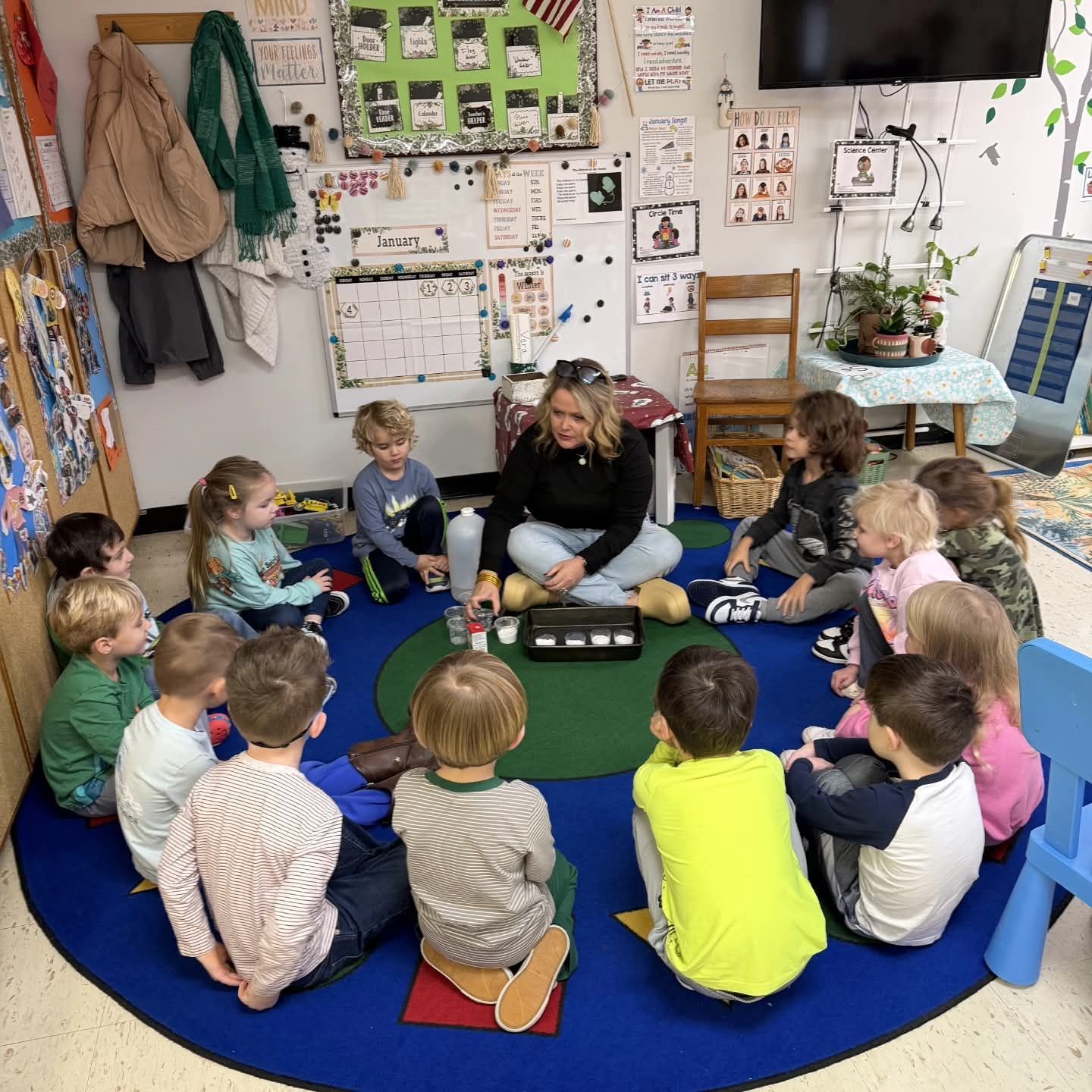
Each of our age levels have goals and concepts that they explore throughout the year. Our teachers provide their students with different experiences and activities in order to expose them to these goals and concepts. Here are a few examples of how this looks in a play-based environment:
Goal: to encourage positive social interaction between peers
Ways/Strategies that may be used to achieve this:
- Small group play – housekeeping, dress-up, train table
- Parallel Play – puzzles, art, playdoh
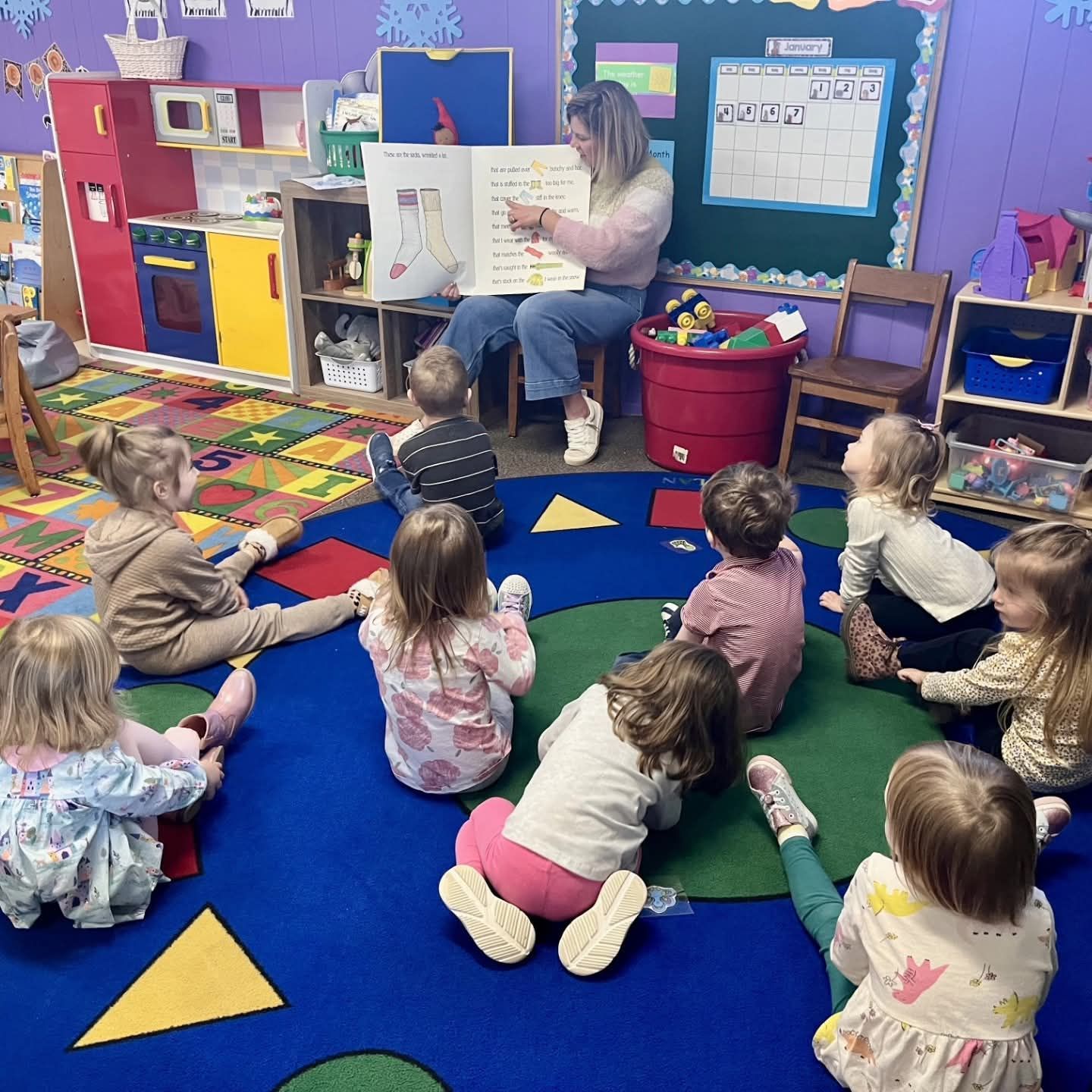
- Whole group play – circle time, dancing, movement activities
Goal: to encourage higher level thinking skills
Ways/Strategies that may be used to achieve this:
- Putting story events in correct sequence by using felt boards or acting the story our as a whole group
- Arranging objects by size and color – small, medium, large
- Asking children open ended questions
Goal: to help children develop pre-literacy and pre-writing skills
Ways/Strategies that may be used to achieve this:
- Labeling items in the classroom
- Reading predictable books
- Giving students opportunities to “write” freely, such as taking an order when playing restaurant
Goal: to help children develop hand strength for writing
Ways/Strategies that may be used to achieve this:
- Playing/molding things with playdoh
- Threading beads on strings
- Applying glue using Q-tip
Below is a list of concepts and goals that are explored in each age level. Please note this is
not a complete list. We do not aim for mastery, but instead, exposure!